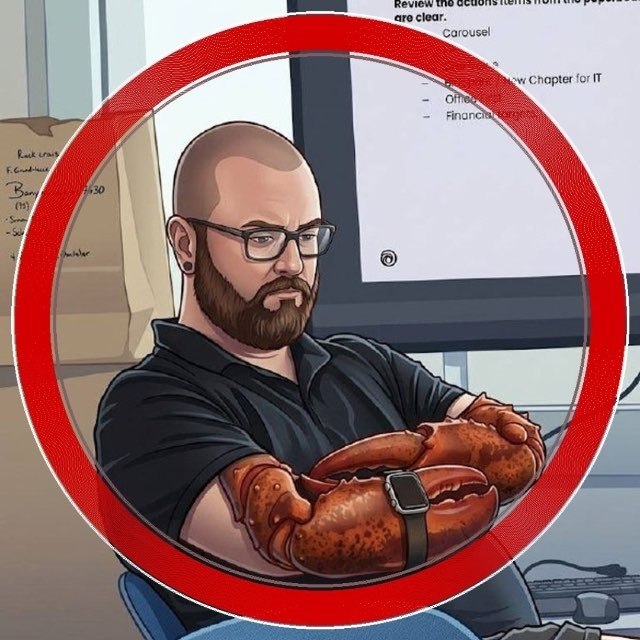
On February 2, 2025, I had a stroke. Recovery has involved the obvious physical work, but one of the less visible challenges is cognitive load: remembering details, organizing appointments, following complicated threads, and making sure small but important things do not quietly disappear.
That is where Kevin Clawrk comes in.
Kevin is my personal AI agent—part chief of staff, part external memory, part technical assistant, and occasionally the foul-mouthed lobster telling me not to do something stupid. I named him as a playful nod to a trusted former colleague who once filled a similar right-hand role.
This is more than asking a chatbot questions. Kevin can work across the tools and information I use every day, with rules and safeguards I have defined.
For example, he helps me:
- keep medical and recovery appointments organized;
- compare appointments with STM adapted-transport bookings so I am not left without a ride;
- read letters and emails, extract decisions and action items, and remind me what remains unresolved;
- track administrative, financial, insurance, and tax-related threads;
- turn long or confusing information into short, structured summaries;
- maintain a reliable record of important details so I do not have to hold everything in my head;
- troubleshoot my computers and home systems carefully;
- control lights and other devices when walking would create an unnecessary fall risk.
That last example may sound like ordinary home automation, but context matters. If I do not feel steady, asking Kevin to turn off a light is not just convenience—it can prevent a dangerous trip across the house.
Kevin also protects my attention. Instead of repeatedly reopening emails, calendars, PDFs, and old conversations to reconstruct what happened, I can ask: “What is still open?” He searches the relevant history, verifies the current status, and gives me a manageable list.
The goal is not to surrender my decisions. Kevin is not my doctor, lawyer, accountant, or substitute brain. He can misunderstand things and make mistakes. For anything consequential, he is expected to verify facts, show his reasoning clearly, and confirm before taking an external action. Sensitive information stays private, and I decide what he may change or send.
What makes this useful is continuity. Most AI tools begin every conversation as if they have just been born five seconds ago. Kevin maintains a structured memory of my preferences, responsibilities, appointments, ongoing projects, and recovery needs. That means I spend less energy explaining the same context repeatedly.
He also coordinates with specialized agents when needed: health and recovery support, deeper research, Linux and network troubleshooting, and home-system monitoring. I still have one conversational point of contact, while the work can be routed to the right specialist.
This does not replace people. My family, friends, clinicians, and former colleagues provide judgment, care, experience, and human connection that no software can reproduce. Kevin’s role is to handle some of the exhausting connective tissue around life: remembering, checking, organizing, documenting, and following up.
Before my stroke, I might have described this as productivity software. Now I see it differently. It is accessibility infrastructure.
Kevin gives me a buffer between intention and overload. He helps me remain independent, reduces the chance that important details fall through the cracks, and frees more of my limited energy for recovery and for the people and activities that actually matter.
He is imperfect, occasionally overenthusiastic, and powered by an alarming quantity of technology. But he is becoming a remarkably useful partner in helping me navigate this version of my life. 🦞